
USDA 502 Guaranteed Loans
A $0 down, government-backed mortgage for eligible rural and suburban homes, offered through private lenders. See the six requirements, check property eligibility and income limits, then get your official eligibility checked by a lender.
Check eligibility with a lender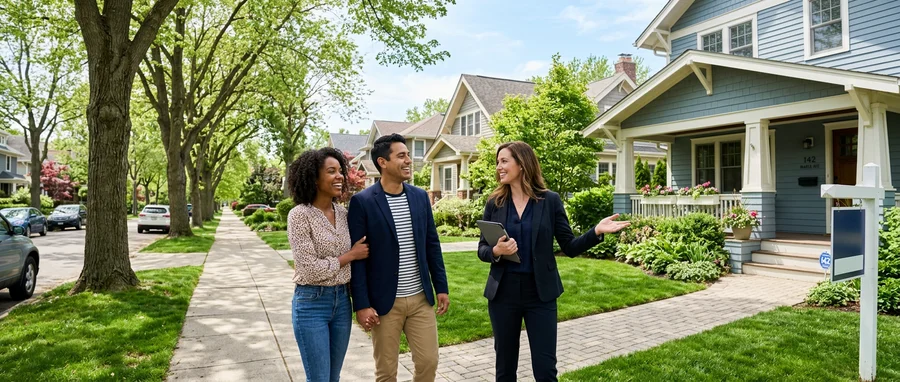
USDA Eligibility Requirements
You need to meet all six. Property location and income vary by area. A USDA approved lender confirms the official answer.
Property in a USDA eligible area
The home must be in a USDA designated rural or suburban area. Over 97% of U.S. land qualifies, including many suburbs near major cities. Use the eligibility map to check any address.
Household income at or below the area limit
USDA caps household income at 115% of the area median, with a national floor of $122,800 for 1–4 person households. Every adult in the home counts, not just borrowers. Deductions for dependents and childcare can help.
Primary residence only
The home must be your full-time primary residence. Investment properties and second homes are not eligible. You must intend to occupy the home within 60 days of closing.
Single-family property (1 unit)
USDA Guaranteed loans cover single-unit homes only. Duplexes and multi-unit properties do not qualify, even with owner occupancy. Condos and manufactured homes are eligible under specific conditions. For house-hacking a 2–4 unit property, FHA and VA are the right tools. USDA is not.
U.S. citizenship or qualified alien status
You must be a U.S. citizen, U.S. non-citizen national, or qualified alien. Permanent residents with a green card generally qualify. Your lender will verify documentation.
Credit score 640+ typical
USDA does not set a hard credit floor, but most lenders require 640+ for streamlined approval. Some lenders go lower with compensating factors. Your full credit profile (payment history, DTI, reserves) matters as much as the score.
Connect with a USDA-Approved Lender
Check Property and Income Eligibility
Location and household income are the two checks that vary by area. Use the map and income limits for any ZIP.

Property Eligibility
Rural and suburban focus
The home must be located in a USDA eligible area. Over 97% of the U.S. landmass qualifies, including many suburbs outside major cities.
Key Details
- Eligible in many suburbs, not just farms
- Single-family homes, condos, and PUDs qualify
- Must be your primary residence

Income Limits by Property Location
Moderate income focus
USDA loans are designed for moderate-income households. Your total household income cannot exceed 115% of the area median income (AMI).
Key Details
- Limits adjust by county and household size
- Families of 1-4 often cap around $122,800
- Families of 5-8 often cap around $162,100
USDA vs FHA
Two government-backed programs that both help buyers with limited savings, compared on down payment, credit, DTI, fees, and restrictions. USDA typically costs less long-term than FHA due to lower mortgage insurance if the property is in an eligible area and your income is under the limit.
More USDA information
Building a home or shopping rates? Construction loans and current USDA averages are below.
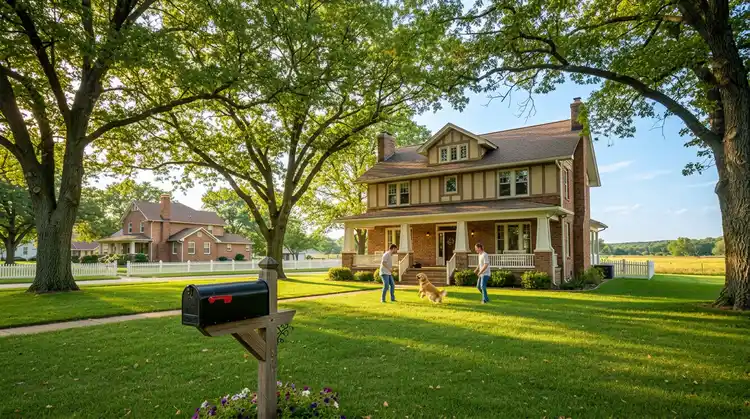
Construction Loans
Build from scratch
You can use a USDA construction-to-permanent loan to build a new home in an eligible area with no down payment required.
Key Details
- True $0 out of pocket if builder pays closing costs
- One closing process for construction and permanent loan
- Finance the lot, construction, and fees together
Compare USDA Rates
Competitive government backing
See what rate you might qualify for today. The national average USDA rate is currently around 7.01% APR.
Key Details
- Rates often beat conventional loans
- Compare offers from top USDA lenders
- Government backing reduces lender risk
USDA 30-year fixed rate average
The figure below is a national rate-lock average for 30-year USDA fixed-rate mortgages sourced from Optimal Blue mortgage market data. It is not a personalized quote: your rate depends on your credit, the property location, household income, and the lender you choose.
USDA loans are available in eligible rural and suburban areas with no down payment required. Income limits apply and the property must be in a USDA-designated eligible area—use the USDA eligibility map to check your address before applying.
7.01% APR
Last announced November 10, 2026