FHA Construction-to-Permanent

FHA Construction Loan. Build with 3.5% Down

An FHA construction-to-permanent loan funds a new custom build anywhere in the U.S. It offers the same low 3.5% down and flexible credit as an FHA purchase loan. The loan funds the build, then converts to a 30-year FHA mortgage at completion.

A smiling young couple looking at each other, his arm around her, in the yard in front of their new home under construction with wood wall framing and roof trusses behind them

Connect with an FHA Construction Lender

FHA Construction-to-Permanent Loan at a Glance

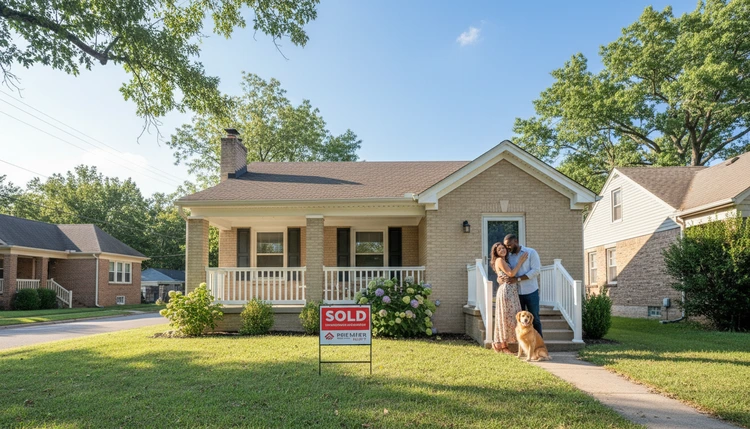
Young couple in front of a starter home financed with an FHA construction loan

Down payment (580+ credit)

3.5% down

Construction period
Up to 12 months
Closing structure
Single-close, one set of closing costs
Mortgage insurance
1.75% upfront MIP + annual MIP
Property type
New single-family primary residence
Location
Anywhere in the U.S., no rural restriction

How the FHA Construction-to-Permanent Loan Works

It's a single loan with two phases: a construction period funded by draws, and a permanent mortgage that kicks in automatically when the home is done.

  1. Phase 1. Application & lender approval

    You apply for an FHA construction-to-permanent loan with an FHA-approved lender. The lender reviews your income, credit, and down payment — same borrower criteria as an FHA purchase loan — plus your builder and construction plans.

  2. Phase 2. FHA endorsement & construction start

    Once the lender underwrites and FHA endorses the case, construction can begin. The lender manages draw requests — funds are released in stages as construction milestones are verified.

  3. Phase 3. Construction period

    During construction you typically pay interest only on draws taken. The construction period is usually up to 12 months. Your lender inspects the property at each draw stage before releasing the next disbursement.

  4. Phase 4. Permanent loan conversion

    When construction is complete and the final inspection passes, the loan converts to a standard FHA permanent mortgage — the same 30-year fixed structure as a purchase loan. You begin making full principal and interest payments, including MIP.

Check eligibility →

Construction to Permanent (CP) refers to the construction of a dwelling on land owned or being purchased by the Borrower. The CP program combines the features of a construction loan with that of a traditional long-term permanent residential Mortgage using a single mortgage closing prior to the start of construction.

HUD / FHAMortgagee Letter 2019-08 (Handbook 4000.1, II.A.8.j)

FHA Construction-to-Permanent Loan Requirements

If you already know FHA purchase loans, borrower rules will look familiar. The builder requirement is what's unique to construction — and what lenders scrutinize most.

Builder requirements

Your builder must meet FHA and lender requirements: a licensed general contractor, insured, and willing to work with FHA construction financing. What lenders care about most is that your contractor has completed a similar project before.

  • Licensed general contractor in the state where the home is being built
  • Must provide a fixed-price construction contract
  • Cannot be the borrower — owner-build is not permitted (unless you are a licensed GC)
  • Lender reviews track record, insurance, and qualifications before approving

Borrower eligibility

  • Credit score 580+ for 3.5% down; 500–579 typically requires 10% down
  • Primary residence — not an investment property or vacation home
  • Steady income and employment history that meet FHA underwriting
  • Debt-to-income typically within FHA guidelines (lender overlays may be tighter on construction)
  • Able to cover the minimum required investment (down payment) from acceptable sources

Check FHA eligibility

Property requirements

  • No location restriction — available anywhere in the U.S.
  • New construction only — not a renovation of an existing home (that's a 203(k))
  • Must be a primary residence when complete
  • Home must meet FHA property standards at final inspection
  • Total loan (land + build) within FHA loan limits for the county

See FHA loan overview & rates

Check eligibility →

Building Instant Equity

A new FHA construction home typically appraises for more than the land plus the cost of construction. That gap is equity at move-in — value you added by arranging the build, not by waiting for the market.

Step 1

Land and a Build Contract

Build Contract
$400,000
Land
+$20,000
Total Project
$420,000

Write the builder contract to cover closing costs up to 6%.

Step 2

Cover the 3.5%

Total Project
$420,000
Required 3.5% Down
$14,700

The 3.5% is on land plus construction, not the build contract alone. Own the lot? That $20,000 can cover the $14,700. Buying the lot? You bring the 3.5% in cash or an eligible gift.

Step 3

Unlock Instant Equity

Final Build Appraised Value
$460,000
Build Contract
-$400,000
Land Value
-$20,000
Financed Upfront MIP (1.75%)
-$7,100
Down Payment (3.5%)
+$14,700
Net Equity at Move-In
$47,600

The 3.5% was never lost. It reduced the loan. Equity is appraisal minus land, construction, and financed MIP, plus the down payment still in the deal.

The market values the finished house, not your construction contract. FHA still charges MIP: 1.75% upfront (usually financed) plus a monthly premium. In a USDA-eligible area, compare USDA construction at $0 down.

Own the lot

Already own the land?

FHA still requires 3.5% down. If the lot is already yours, that equity can stand in for the cash on this same construction-to-permanent loan.

  • Owned the lot six months or longer: FHA credits the full appraised land value toward the 3.5%.
  • When that equity covers 3.5% of land plus construction, no extra cash is required for the down payment.
  • Closing costs are separate. A builder can pay up to 6% of the loan toward them if it is written into the contract.

See how land equity covers the 3.5%

Couple standing in front of the home they built using an FHA construction loan

Get your answer

Build Anywhere with 3.5% Down if You Qualify

FHA construction loans are available but not widely offered. The form above connects you with FHA-experienced lenders who can confirm your eligibility and builder qualifications.

FHA Construction Loan FAQ

What is an FHA construction loan?

An FHA construction loan is a single-close construction-to-permanent loan insured by the Federal Housing Administration. It funds the build during a construction period (typically up to 12 months), then automatically converts to a standard FHA mortgage when construction is complete. The main benefits are a low 3.5% down payment (with credit 580+), flexible credit standards, and availability anywhere in the U.S. — no rural location requirement like USDA.

What are the FHA construction loan eligibility requirements?

Borrower requirements match a standard FHA purchase loan: primary residence, credit typically 580+ for 3.5% down (500–579 requires 10% down), and the loan must stay within FHA county loan limits. The builder must be a licensed general contractor who meets FHA and lender requirements — owner-build is not allowed unless you are yourself a licensed GC. The finished home must meet FHA property standards.

Is an FHA construction loan the same as an FHA 203(k)?

No. An FHA construction loan (one-time close / construction-to-permanent) finances a brand-new custom build. The FHA 203(k) is a renovation loan for buying or refinancing an existing home and funding repairs or remodeling. If you are building from the ground up, you need construction-to-permanent financing — not a 203(k).

What is a one-time close loan?

A one-time close loan — also called a single-close or construction-to-permanent loan — combines the construction financing and the permanent mortgage into a single closing. One application, one approval, one set of closing costs, before construction begins. When the home is complete, the loan converts automatically to the permanent mortgage with no second appraisal and no second underwriting review. Most FHA construction loans are structured as one-time close; some lenders also offer two-close options.

Can I buy land with an FHA construction loan?

Yes, in most cases. The land purchase can be rolled into the FHA construction loan, and the total loan amount (land + construction) must stay within FHA loan limits for the county. If you already own the land, its equity may count toward your down payment or acquisition cost calculation. Discuss your land situation with an FHA construction lender upfront.

How long does the construction phase last?

FHA construction-to-permanent loans typically allow up to 12 months for the construction period. During this time, funds are disbursed in draws as each phase of construction is completed and inspected. Interest-only payments are made on the outstanding draw balance. Extensions may be possible depending on the lender if construction runs longer.

What are the fees on an FHA construction loan?

FHA construction loans carry the same mortgage insurance as FHA purchase loans: a 1.75% upfront MIP (typically financed into the loan) and an annual MIP (currently about 0.55% for most new loans), paid monthly. With less than 10% down, annual MIP generally lasts for the life of the loan. Construction-period fees and interest during draws vary by lender.

How is an FHA construction loan different from USDA or conventional?

Compared with USDA: FHA requires 3.5% down (vs. $0), has no location or income limits, and uses MIP instead of USDA guarantee fees. Compared with conventional: FHA allows lower down payments and more flexible credit, but MIP lasts longer and you must use a builder who meets FHA requirements. If you qualify for USDA or VA, those usually cost less long-term; FHA is the strong fallback when you need low down payment without rural eligibility.

Does a new FHA construction home appraise for more than it costs to build?

Often, yes. The as-completed appraisal is based on comparable finished homes, not your construction contract. A $400,000 build on a $20,000 lot routinely appraises above the combined cost because the market values the finished house. That gap is equity at move-in. It is not guaranteed — the appraisal has to support it — but it is the usual construction outcome, not a special FHA product. If you already own the land, that equity can also cover the 3.5% down payment.

Does the builder need to be FHA-approved?

Yes. For FHA construction-to-permanent loans, the builder must be a licensed general contractor who meets FHA and lender requirements — typically including insurance, experience building similar homes, and a fixed-price contract. Owner-build is not permitted unless you are a licensed GC yourself. Confirm your builder can work with FHA construction financing before you sign a contract.